AI
What is AI accounting software, and what does it do?
What it does for you, and the one question to ask before you pick one.
The short answer
AI accounting software is bookkeeping software that does the routine work for you. It sorts bank transactions, books payouts from the apps you use, matches payments to invoices and flags things that look wrong. You can ask it about your numbers. The best ones let you check its work before it posts.
QuickBooks is a registered trademark of Intuit Inc. This comparison is independent and is not sponsored, endorsed, or approved by Intuit.
On this page
What does AI accounting software actually do?
Most of keeping books is the same job over and over. A charge comes in from the bank. Somebody decides what it was. A customer pays, and somebody finds the invoice. A payout lands, and somebody figures out what’s inside it. AI software takes that job off your desk.
AI accounting software does six kinds of work: it sorts bank transactions, reconciles the bank, chases payments, closes the month, answers questions and runs payroll. Each row shows one vendor’s version as of October 2026, and whether a person approves before it acts.
| Kind of AI help | What it does | One vendor’s version (as of October 2026) | Does a person approve first? |
|---|---|---|---|
| Sorting bank transactions | Sorts bank lines into accounts and asks about the ones that need more detail | QuickBooks® Accounting AI | Lines it’s sure of wait in Ready to post for you to post. Intuit says lines that need more context get updated automatically |
| Reconciling the bank | Matches your books to the bank statement and flags what doesn’t match | Digits AI Bank Reconciliations | You review the exceptions it flags |
| Chasing payments | Sends a customer a reminder about an unpaid invoice | QuickBooks connector in Claude | Yes. A reminder goes out only after you confirm |
| Closing the month | Runs the close steps your accountant sets, the same way each month | Puzzle AI Close | Yes. “Nothing posts to the ledger without your sign-off” |
| Answering questions | Answers questions about your invoices, expenses and reports in a chat | FreshBooks connector in Claude | Nothing to approve. It’s read-only |
| Running payroll | Collects employee details and runs payroll | QuickBooks Payroll AI | Runs payroll itself; brings in a manager only for confirmations or approvals |
The Journal of Accountancy, the AICPA’s magazine, citing a 2025 CPA.com report, says accountants already use AI for bank reconciliations and transaction coding (August 2026).
Say a $412 charge from Home Depot shows up on your card. The software looks at the vendor, the amount, and what you did with the last few Home Depot charges. It suggests Job Supplies. It’s usually right, and it gets better the longer it works with you.
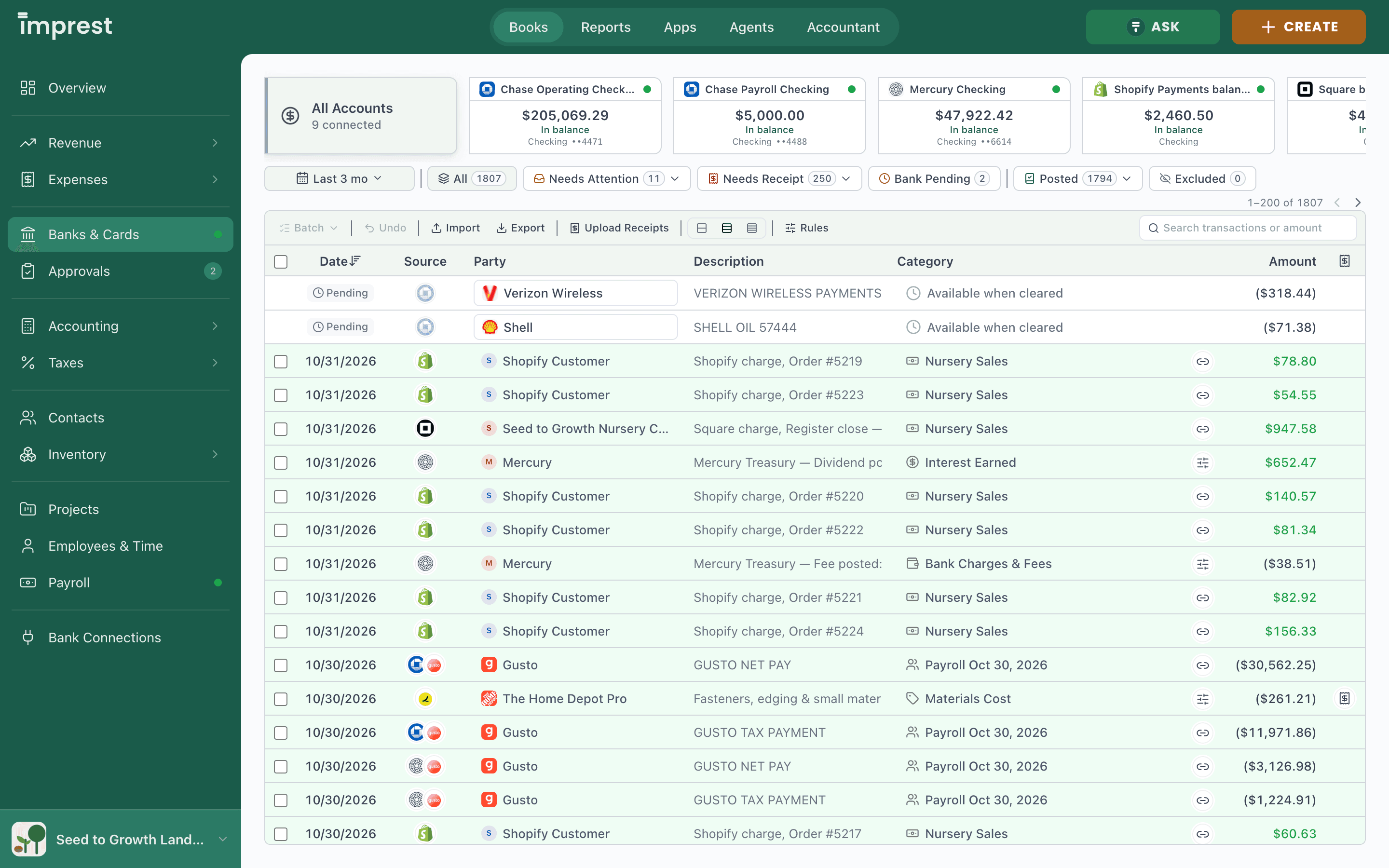
The bigger win is the work that comes from your other apps, once they’re connected. A $4,820 Stripe payout hits your bank. That one deposit is really 63 customer payments, minus Stripe’s fees. The software breaks it apart, books the sales and the fees, and matches the total to the deposit. It does the same with a Shopify payout full of orders, refunds and sales tax, or a day of sales from your Square register. When Gusto runs payroll, the wages, the taxes and the bank withdrawal land in the right accounts.
It watches for trouble, too. The same charge twice in one day. A bill three times bigger than that vendor usually sends. A payout that doesn’t add up.
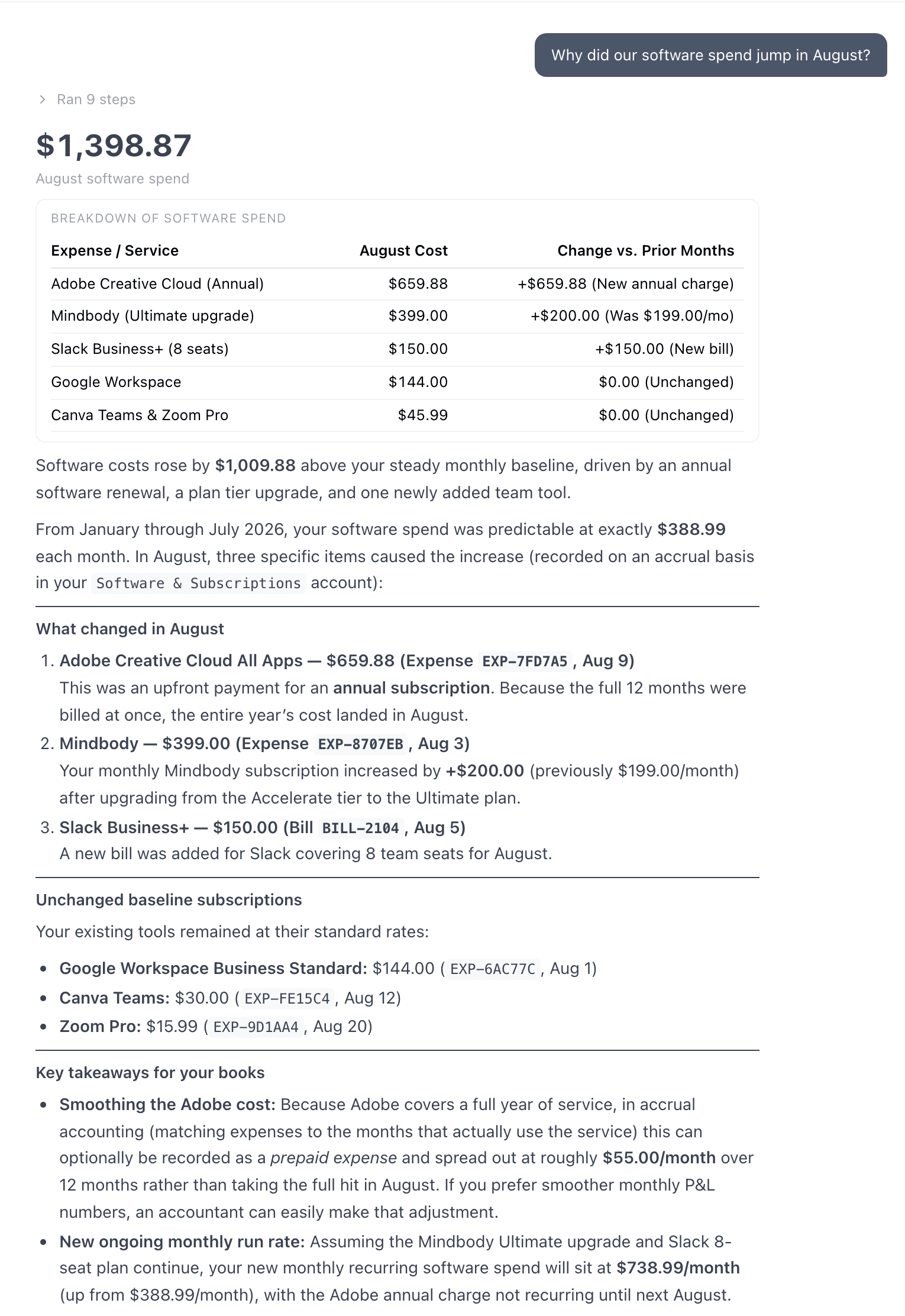
And you can type a question the way you’d ask a person. “What did we spend on fuel last quarter?” “Which customers owe us more than 30 days?” You get the answer, and you can click through to the transactions behind it.
How is that different from the bank rules I already have?
A bank rule is an order you give once. Anything from Adobe goes to Software. It does exactly that, every time.
AI goes further. It looks at the amount, the vendor’s history and what you did last time, so it can handle the charge no rule covers. It reads a payout and knows what’s inside. A rule can’t do any of that.
The best setups use both. Rules for what you’ve already decided. AI for everything else.
Does AI accounting software post to my books on its own?
Some does. As of October 2026, QuickBooks Online puts the bank lines its AI is sure of in Ready to post for you, while Digits posts its high-confidence lines on its own. Before you choose, ask what posts without you and where you see what the AI did, and read is AI bookkeeping safe? for a tool-by-tool map of what each one posts on its own.
Do I still need an accountant?
Yes, and AI makes them more valuable. When the routine work is done, your accountant’s time goes to the things that grow your business: planning for taxes, choosing the right entity, deciding when to buy that truck. The Journal of Accountancy says the same: AI takes the routine work and frees accountants for advisory work (August 2026).
The owners who get the most from AI pay for fewer hours of data entry and more hours of advice. If you’re weighing software against hiring help, read what a bookkeeper costs and can AI replace my bookkeeper?
Frequently asked questions
Is AI accounting software the same as bookkeeping software?
It’s bookkeeping software where AI does the routine work. The books underneath should be the same double-entry books your accountant already knows.
Can AI accounting software book sales from Stripe, Shopify or Square?
The good ones can. They pull in each payout, split it into sales, fees, refunds and tax, and match it to the deposit in your bank.
How is AI accounting software different from bank rules?
A bank rule does one thing you decided once, like sending every Adobe charge to Software. AI looks at the vendor, the amount and what you did last time, so it can handle the charge no rule covers.
Can I ask AI accounting software questions about my business?
Many products let you type a question, such as what you spent on fuel last quarter or which customers are more than 30 days late. Look for answers that link to the transactions behind them.
Do I still need an accountant if I use AI accounting software?
Yes. AI takes over routine work like transaction coding and bank reconciliations. The Journal of Accountancy says that frees accountants for advisory work, so your accountant’s hours go to tax planning and big decisions instead of data entry.
Sources
- Intuit, “Overview of Intuit AI in QuickBooks Online,” updated August 4, 2026, checked October 31, 2026
- Intuit, “Use Ready to post in QuickBooks Online,” updated October 20, 2026, checked October 31, 2026
- Intuit, “Use the QuickBooks connector in Claude,” updated October 28, 2026, checked October 31, 2026
- Digits, “Always Be Closing: Introducing AI Bank Reconciliations,” November 10, 2025, checked October 31, 2026
- Digits Help Center, “How AI Works in Digits,” checked October 31, 2026
- Puzzle, “AI Close Is Now Available,” April 21, 2026, checked October 31, 2026
- FreshBooks, “FreshBooks + Claude: Ask AI About Your Business Finances,” undated, checked October 31, 2026
- Journal of Accountancy (AICPA), “Real-life ways small firms use AI,” August 1, 2026, checked October 31, 2026